
That tight, nauseous knot that shows up right before you open a rejection email might have nothing to do with your talent. I get some version of that question constantly from other illustrators and painters who find this site somewhere between a freelance dry spell and a full creative shutdown. Solar plexus healing sounds like a strange answer to such an ordinary problem: a blank canvas, a stomach that drops before you've made a single mark. But self-doubt has an address in the body, and once you find it, chakra alignment stops sounding so abstract. Here are the questions I actually get asked about artist's block and this particular chakra, answered as plainly as I can manage.
Quick disclosure before we get into it: this site runs on affiliate links, so if you click through to something mentioned here and buy it, I earn a small commission at no extra cost to you. I only bring up tools and programs I've actually tried during my own messy stretches with this. None of what follows is medical or therapeutic advice — I'm an illustrator with a yoga mat and a lot of curiosity, not a licensed anything, so loop in an actual professional if what you're dealing with is severe anxiety or physical pain.
The Chakra Behind an Artist's Self-Doubt
Manipura is the name for the third of the seven main energy centers in the system most people borrow this language from, and it sits roughly behind the stomach — the same place a stress response tends to gather. Solar plexus is the anatomical term attached to this Chakra, and I promise I'm not going to turn this into an anatomy lecture. What matters more than the biology is the pattern: when a client passes on a pitch, or a painting isn't landing the way you pictured it, the doubt tends to gather in that exact spot, not just in your head. Readers ask me some version of "is this real, or am I just making a metaphor out of indigestion" more than almost anything else. My honest answer is that I don't know for certain — I just know that treating the sensation as information, instead of a character flaw, changed how I work.
Is This a Spiritual Awakening, or Just a Rough Week?
Not every stomach-knot week is a spiritual awakening, and I'd be careful about labeling it one just because it sounds more meaningful than "I'm stressed about money." A genuine awakening tends to rearrange more than your work schedule; it changes how ordinary moments feel, not only how deadlines feel. If what you're describing eases up once the project pressure lifts, that's closer to a plain confidence wobble than anything bigger. Either way, the tools overlap enough that the label doesn't matter as much as people think it should.
Do You Actually Need Crystals or Oracle Cards?
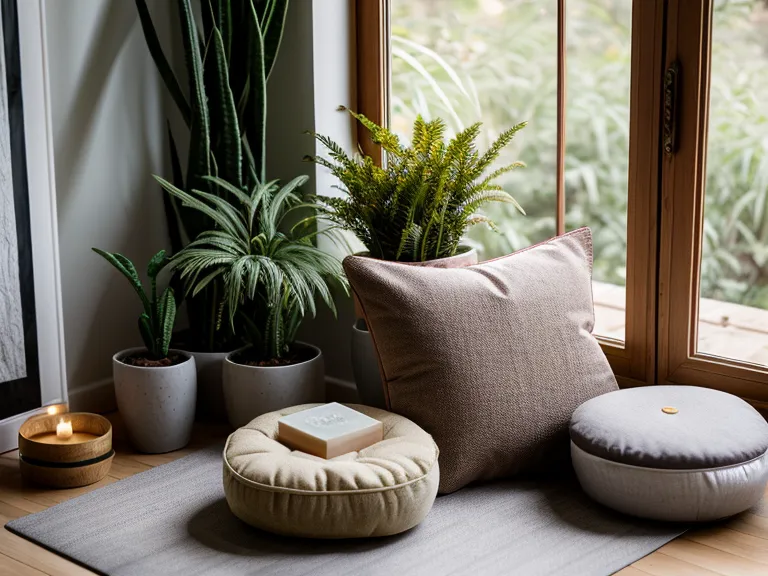
No, and I say that as someone who has bought more of both than I'd like to admit. At one point I owned four different oracle card decks, picked up in four different moods, and never used any of them consistently enough to learn what the cards even meant beyond the box art. Here is the thing: the tool isn't the healing. The attention is. If a deck or a crystal gets you to sit still for two minutes and actually notice the knot in your gut, it did its job. If it just becomes one more thing you feel guilty about not using, skip it entirely.
Chakra Work Isn't a Substitute for Shadow Work
People sometimes ask if visualizing a glowing yellow light at the navel is supposed to replace the harder, uglier work of looking at why the doubt is there in the first place. It isn't. Shadow work — sitting with the parts of yourself you'd rather not examine, like envy of a peer's success or the fear of being seen as a fraud — tends to get at the root, while a chakra-focused practice is more like tending the symptom while the deeper work happens underneath. Treat them as two different tools in the same kit, not competitors.
Dark Nights, Kundalini, and Other Big Words
Two questions come up together often enough that I'll answer them in the same breath. First: is a prolonged, gutting stretch of self-doubt actually a dark night of the soul? Sometimes yes. That phrase describes a much longer, more disorienting collapse of meaning than a bad art week, and it deserves its own conversation rather than a rushed paragraph here. Second: is the heat or buzzing some people describe in the gut connected to kundalini energy? For some people the two do seem to overlap, but I'd rather point you toward people who specialize in that territory than pretend I can diagnose it from here.
Where a Moon Reading Fits Into the Picture
A different question I get is whether looking at your own chart helps more than another chakra meditation, and for me, it did. I went through a Moon Reading during a stretch when I couldn't tell if I was resting or just avoiding my desk, and it reframed my creative cycles instead of treating every slow week as a personal failure. That's closer to what people mean by soul purpose than anything about willpower; the sense that your work is pointed somewhere specific, not just a to-do list you keep failing to clear. It's also where synchronicity tends to come up: once you start paying attention to your own patterns, the repeating coincidences that used to feel random start looking more like feedback. If you're curious what your own reading says, you can check out your own reading here — it won't fix a deadline, but it's a reasonable place to start if the doubt feels bigger than one bad project.
Ask Your Higher Self the Smaller Question
When the doubt gets loud, the question I actually use is smaller than it sounds. I picked up a version of this from working with accessing Akashic records for creative inspiration. Instead of asking my higher self how to fix my entire career, I ask what the next smallest true step is. Usually it isn't "land the big client." It's "draw one circle," or "clean your brushes." A short meditation practice helps here too, though it doesn't need to be elaborate — a few quiet minutes with the question is often enough to hear the answer that isn't panic.
Building a Fence Around Your Energy
Somebody asked me recently what to do when it isn't a practice you need, just a person, and honestly, sometimes that's the real answer. My friend Paloma Devereux, who I met in art school and now lives on the other side of the country, is who I call when the spiral gets loud, mostly because she just listens without immediately trying to fix it. But the more consistent habit has been daily spiritual protection, deciding ahead of time how much of other people's opinions and highlight reels get into my head on a given day. A simple grounding practice, even just feeling your feet against the floor before you check your phone, does more than people expect. My version some mornings is a walk through The Grotto, sitting on a bench above the cliffs instead of scrolling, giving the doubt five minutes of my attention instead of the whole afternoon.
Can Brainwave Audio Actually Help?
People also ask about sound and frequency work, usually because it feels less "woo" than a chakra conversation. I've been experimenting with the Billionaire Brain Wave audio on rough mornings. The name undersells it, but it's really a brainwave entrainment track meant to nudge you toward a calmer, more focused state when your ego is the loudest voice in the room. It hasn't replaced anything else I do. It's more like a shortcut on a day when a full meditation feels impossible and the inbox can wait a few minutes longer.
Quick Practical Steps for an Anxious Afternoon

If you want something concrete for right now, here's what actually helps on a bad day. Yellow does seem to matter, at least for me, so I'll spend twenty minutes just laying down washes of cadmium yellow and ochre, not trying to make anything good, just sitting with the color instead of the panic.

Some mornings I'll cut a piece of citrus and just smell it while the coffee brews, which sounds too simple to do anything, but it's a fast way to interrupt a spiral before it fully forms. Writing down three small things you did that took even a little courage works better than it should — courage doesn't have to mean anything dramatic, it can mean sending the email you were dreading. This personalized video walks through your own lunar patterns, if you want to see what your low-energy weeks are actually about instead of just blaming yourself for them.
How Will I Know It's Actually Working?
You'll probably know before you can explain why. I remember one unremarkable weekday morning when I woke up and the first thing in my head wasn't the usual inventory of everything I'd done wrong. It was just coffee, and then work, in that order, with nothing else crowding in. A woman I know from an online meditation group, Vesna Jovic, rarely talks about her own practice in the group itself, but the couple of times we've gone deep one-on-one, she's said something similar. The shift isn't dramatic, it's just an ordinary day where the spiral doesn't start. That, more than any single meditation or reading, is what convinced me this wasn't just wishful thinking. Working through what I'd call creative burnout taught me that worth isn't tied to output — it's tied to whatever keeps you wanting to make something in the first place, and that fire doesn't need to roar to still be lit.
Keep the fire fed, even if today all you can manage is a single spark. The questions don't stop coming, and neither, it turns out, does the next small step.